Zhenneng - Stainless Steel Kitchenware Manufacturer & Stainless Steel Cookware Factory For Over 35 Years
Language
Explore key differences between a stainless steel cookware (including nickel-free) and non-stick cookware. Join us as we talk about their pros, cons, and ideal uses to help you choose the best one.
We all love cooking (or at least eating). However, when it comes to choosing the best cookware, there is always a battle between the stainless steel cookware and the non-stick cookware, which never seems to cool down. Stainless steel will perform the best in terms of durability and professional-quality cookware, but the non-stick cookware will make cooking and cleaning up extremely simple.
Everyone has their own favorite between the two. For those who are health-conscious, nickel-free stainless steel cookware is the best option; for those who prefer to flip with no effort, the best non-stick cookware is ideal. Both of these have their own advantages, disadvantages, and maintenance that you must know. This article explains the main differences between the two types of cookware so that you can find the most suitable one based on your kitchen needs.
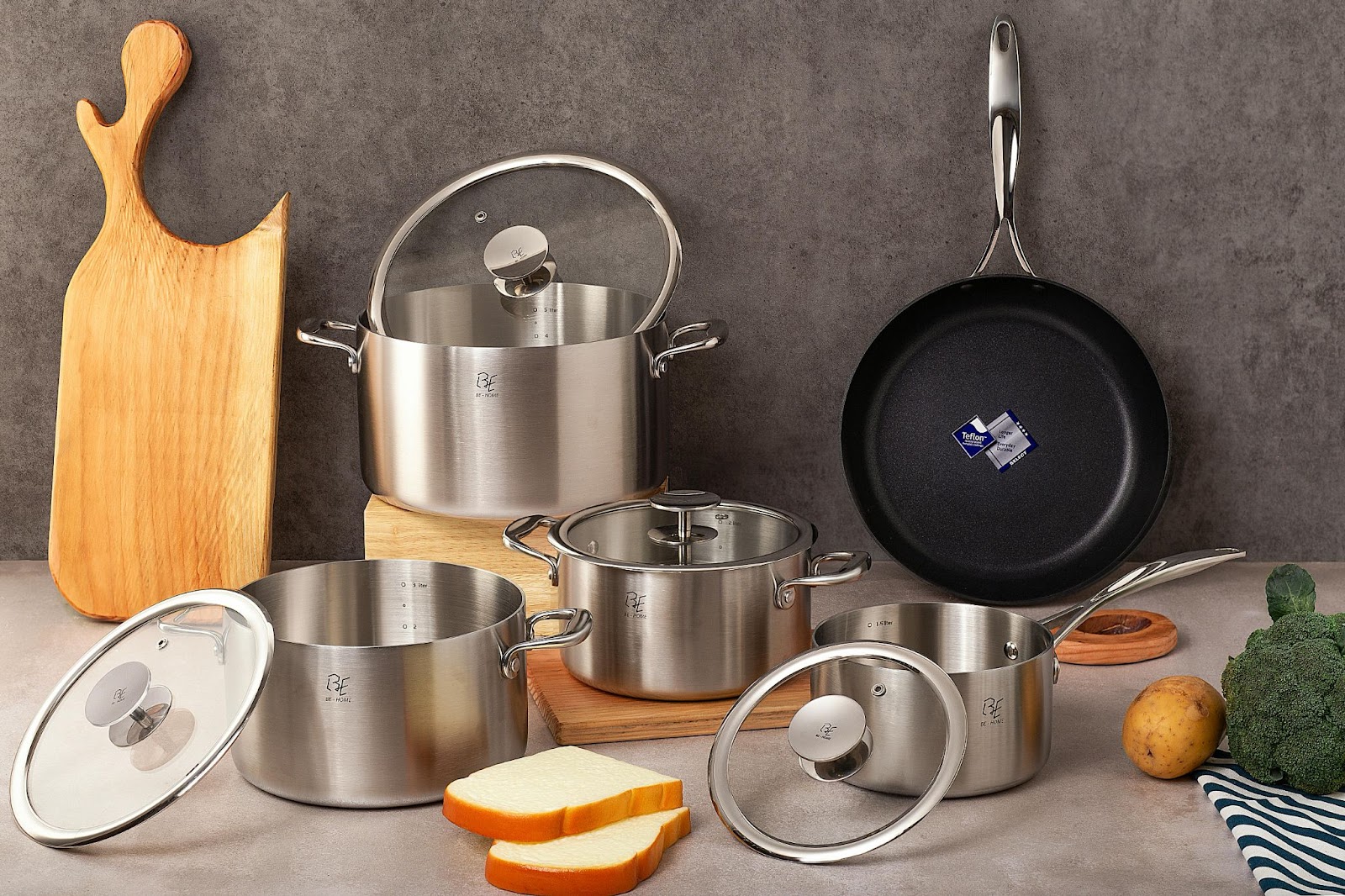
Stainless steel cookware has become very popular in the home and professional kitchen due to its durability and versatility in a wide range of cooking techniques. It is generally prepared using layers of steel and aluminum/copper cores to provide an even distribution of heat. High-quality stainless steel, such as 18/10 grade, has chromium to prevent rust and nickel to prevent corrosion and give it a shine.
Stainless steel cookware is also available in nickel-free variations for people with allergies and sensitivity issues.
Durability and Longevity: With proper care, stainless steel cookware can last 15-20 years and, therefore, is considered a long-term investment. It is rust, corrosion, and stain-resistant, and compared to pan coatings that tend to wear down faster, it still looks brand new even after years.
Heat Distribution and Retention: Stainless steel has the ability to evenly distribute heat when paired with an aluminum or copper core, resulting in a decrease of hot spots by up to 30% compared to lower-priced pans.
Non-reactive Surface: Stainless steel does not react with acidic or alkaline food products, helping you maintain 100% flavor integrity. Ideal for tomato sauces, citrus brushes, or wine reductions.
Versatility: They are ideal when it comes to searing, browning, boiling and baking. Some austenitic grades (18% Cr, 8-10% Ni) can resist temperatures up to 870°C (1,600°F) and some special grades can resist up to 1,200°C.
Food Sticking Issues: Food sticking can increase by 50-70% without the recommended preheating and oiling, which creates problems for inexperienced cooks.
Higher Learning Curve: Expertise in temperature control is essential; overheating can lead to scorching. Over 40% of people who cook at home find it hard to get into a cooking routine with stainless steel pans initially.
Heavier Weight: Top-tier stainless steel can make the whole unit 20-30% heavier than the ones with a non-stick surface, which would be less convenient when a cook wants to change positions quickly or if they have mobility issues.
The surface of non-stick cookware is coated with (Polytetrafluoroethylene)PTFE, and ceramic to prevent food from sticking. This is suitable for cooking low-oil food, and can be easily cleaned up. The finest non-stick cookware is more likely to use a multi-layer coating to offer more durability and even heating.
Effortless food release: The nonstick pans are perfect for preparing eggs, pancakes, and other fragile foods. They are up to 70% easier to release food than stainless steel. Fish, eggs, pancakes, crepes and other foods slide out of the pan without breaking. This would especially come in handy when you are cooking something for the first time or working with delicate foods.
Easy to clean: There are no stains and residues on the surface, so you can easily wash it with soapy water and a sponge, which will save you time. That will definitely reduce scrubbing time.
Healthier cooking: They only use 50-80% of oil and butter in cooking due to the non-stick surface. As a result, it becomes easier to prepare a light meal, and this reduces your calorie intake.
Lightweight: The non-stick pans are usually made of light metal, e.g., aluminum, so that picking up and tilting of the pans is very easy and they can be handled easily. The pans are 30-50% lighter as compared to the cast iron and other stainless steel pans.
Beginner-friendly: They are well-suited for cooks who do not want the hassle of cooking. Nonstick pans are a go-to choice for beginners looking for an easy-to-use option.
Lower heat tolerance: Most of the coatings begin to degrade above 500°F (260°C) and this adversely affects life and safety. The PTFE (Teflon) coatings are able to emit toxic gas in case of overheating.
Shorter lifespan: The coatings have a shorter lifespan, 1-5 years of normal use, depending on maintenance and quality.
Utensil restrictions: Wood, silicone or plastic utensils are needed; metal utensils may damage its coating in a single use.
Environmental concerns: Some coatings use PFAS, which persist in the environment. That’s why their recycling or disposal is less eco-friendly.
So, which one should you choose? Let's answer this question in our side-by-side comparison.
So, a stainless steel pan is ideal if you are an experienced cook, and non-stick pans more suited for beginners and people looking to make low calorie meals.
Let's now talk about some common scenarios when each of these pans can be used.
You frequently roast meats, caramelize vegetables or make pan sauces.
You use high heat or put it in the oven.
You are interested in a set that will last decades.
A little extra cleaning is fine with you.
As an allergic person, you want a nickel-free stainless steel cookware to be safe..
You make eggs, pancakes or fish regularly.
You like cooking with minimal or no oil.
You want quick cooking and fast cleanup.
You need lightweight pans for easy handling.
You replace pans every few years and don’t mind the shorter lifespan.
So, which one is best? Stainless steel or nonstick? There is no one-size-fits-all answer to this. Both of them have their good and not-so-good properties.Stainless steel cookware offers greater durability, higher temperature resistance and longer life. Non-stick cookware helps in making the daily cooking quicker, less messy and easier, particularly when dealing with delicate or sticky items. Still not sure? Get them both: stainless steel to sear, roast and make sauce, and the non-stick cookware to make fast, low-oil meals. By knowing the pros & cons of each, you can incorporate them in your cooking style.


LEAVE US A MESSAGE
Zheneng people continue to forge ahead, with the virtuous humanities and exquisite technology perfect combination, full of Unite love of life for you to create elegant, delicate stainless steel daily use and kitchen tableware supplies, With high quality and efficient after-sales service.
Copyright ? 2025 Guangdong Zhenneng Stainless Steel Industry Co., Ltd. - www.csbm2013.com. All rights reserved . ISSN 2024181357-1