Zhenneng - Stainless Steel Kitchenware Manufacturer & Stainless Steel Cookware Factory For Over 35 Years
Language
If sticking keeps happening in your stainless steel pans and is ruining your cooking, discover the fix that actually works. Read now!
Stainless steel cookware offers both beauty and endurance, but one mistake, and the results will fall far short of flawless. There must be times when even your best ingredients end up ruined just because the pan didn't create a non-stick effect (Leidenfrost effect). This happens with almost every attempt when patience isn't part of the recipe.
It's time we learn how to eliminate sticking all while keeping our stainless steel pans in perfect condition.
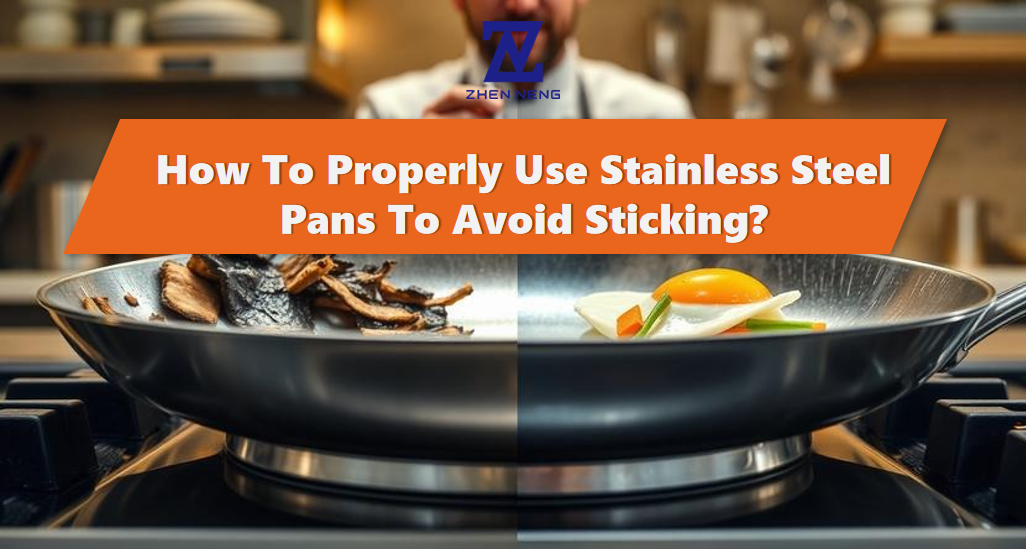
Why Do Stainless Steel Pans Stick Easily?
There are many surprising factors at play that influence whether your meal obeys or defies your cooking efforts. But the reason why food only sticks to stainless steel cookware is because stainless steel has no natural non-stick coating like Teflon or ceramic surfaces. Temperature, surface chemistry, and moisture, these 3 are the scientific pillars behind how ingredients behave on a hot stainless-steel surface.
1- Microscopic pores & thermal expansion
When the pan heats up, its metal lattice expands and this alters the metal's surface energy, increasing its attraction to moist, protein-rich foods and the natural sugars in your meal. But, if you allow the metal to reach the right temperature first, and then test the heat with a water droplet, those pores contract and become far less hospitable to sticking reactions.
2- Protein Bonding & Moisture
Improperly oiled surfaces open doors for aggressive protein attachment. And this doesn't end well for your meal as well as for your stainless steel pans’ everyday performance. It’s best to use an oil with a high smoke point, and then add your ingredients only once the oil moves fluidly across the surface.
3- Wrong Timing / Impatience
Impatience has a huge hand in sabotaging all the preparation you just did. Because it takes time to stabilize the pan's energy field and heat distribution.
If, for example, you add cold ingredients to an underheated pan, you rush the process and overcrowd the surface, or you just skip the preheat phase, your pan becomes a magnet instead of a culinary tool.
4- Residue Build-Up & Uneven Heating
Old and burnt buildup acts like invisible glue or better say, like a sticky net across the surface that disrupts the thermal flow, and then creates "hot zones" that trap food in one spot and force uneven browning.
This is the most common way the pan's thermal flow becomes compromised and its effectiveness in cooking evenly starts to fail.
How To Make A Stainless Steel Pan Stick Less? Proper Preheating & Oiling
Three core steps determine whether you achieve non-stick satisfaction or wonder where you went wrong. Here they are:
Step 1
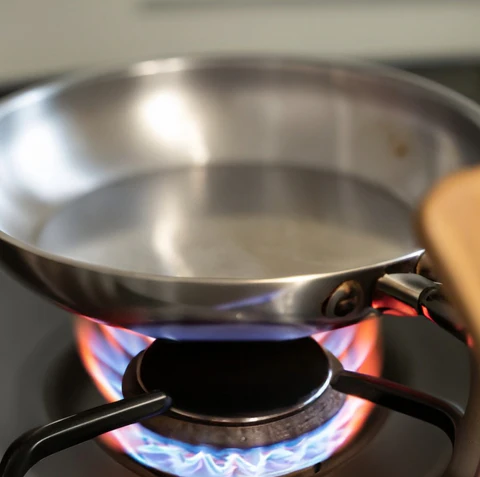
Heat the pan on a medium setting, then raise it just enough so the oil can spread evenly and coat every inch of the pan for perfect coverage. Most chefs suggest a cooking time of 1 to 3 minutes with a touch of patience, and your pan will reach a state where sticking is simply not possible.
Step 2
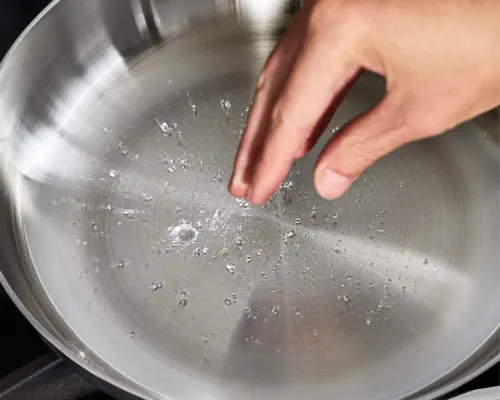
Just a few drops of water into the pan, and you'll notice tiny beads forming, ensuring your pan is now primed for a cooking session that is destined for perfection.
If the beads evaporate in less than a second, it's a red signal that the heat is too intense, and the pan might leave you with nothing but a kitchen full of smoke and a scorched aroma.
But if water beads bounce and remain intact, that's the gold indicator that the heat is just perfect for making, toasting, and sautéing.
Step 3
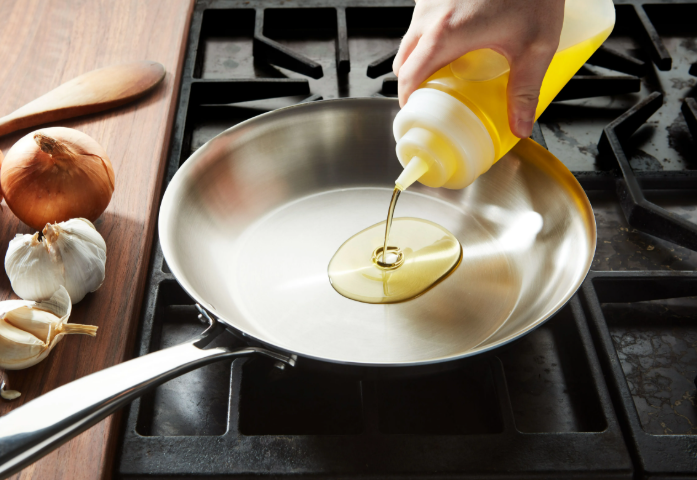
It's incredibly crucial that you add oil after the preheating of the stainless steel pan, because it maximizes the oil’s ability to sear and create an irresistible golden-brown layer. Once the oil starts shimmering, at this point your food will crisp up beautifully, and won't stick to the pan or become a sad, unappetizing mess.
Proper Preheating And Oiling Methods For Different Foods
Every food needs individual attention and ideal preheating because proper care will make the difference between crispy and a soggy tragedy.
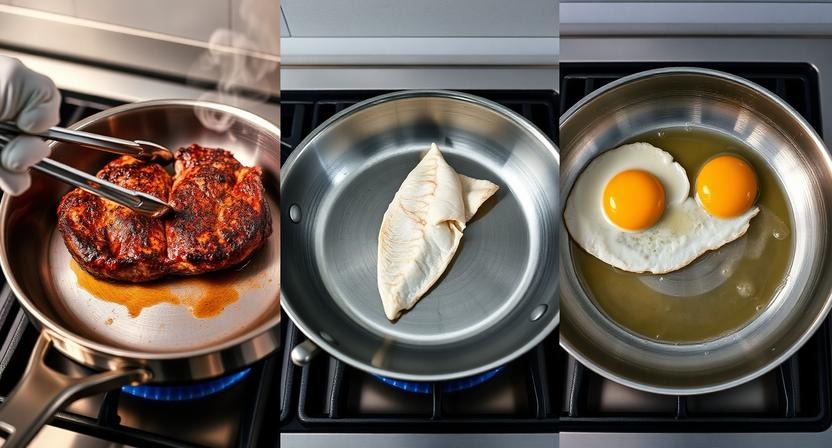
1. Meat
2-3 minutes of pre-heating is more than sufficient to lock in all the flavor without drying out the meat. Make sure the pan passes the water drop test after 2-3 minutes of consistent flame exposure. After adding the meat, it’s super essential not to move it around too quickly. Because the crust takes patience to perfect, and once it does, the flavor reaches its peak.
2. Fish
Fish doesn't respond well to excessive heat and becomes rubbery and dense instead of delicate. So, both heat and oiling need to be carefully balanced and approached with controlled consistency.
The truth is, most people don't consider stainless steel pans for delicate fish fillets, because stainless steel has an unfair reputation for being "too harsh." This is kind of true to some extent, but the real issue lies with the cook, not the pan. Moderate heat and light layers of oil are the difference between sticking and pure culinary control.
3. Eggs
Eggs don't forgive high heat. Especially when it's stainless steel cookware, you need to lower the flame and allow the oil to coat the surface evenly. Patience over speed.
Fried eggs set best when the heat is gentle, and the whites are allowed to spread naturally and create delicate, lacy edges. As for scrambled, it"s better if you stir constantly over low heat while keeping the texture custard-like, not dry. Adding a small knob of butter at the very end will do just nicely.
Correct Cooking Tips For Stainless Steel Pot And Pans (Practical Checklist)
While non-stick pans are designed for convenience and offer easy release, still stainless steel pans and pots remain the gold standard for durability and professional-level cooking.
So, here are a few essential tips to avoid common mistakes beginners often make while attempting to achieve perfect browning on stainless steel.
● Preheating is not an option; it must always come before adding oil. Because once skipped, you’ll lose the natural non-stick effect completely. So in order to avoid sticking, burnt patches, and raw centres, preheating must become your absolute kitchen habit.
● Dryness might be the single most underrated step in successful stainless steel cooking. But you must always pat your proteins dry before allowing them to meet the oil. As moisture is the real barrier between true caramelization and dull meat, you don't want surface moisture stealing your progress.
● Cooking in stainless steel cookware is not something you can do with low-smoke-point oils. Butter, for example, does not survive well under high heat on its own. So, adding it should only be done towards the end of cooking. As for the start of the process, oils like avocado, grapeseed, and refined peanut oil perform best.
How To Remove Stubborn Food Residue After It Sticks?
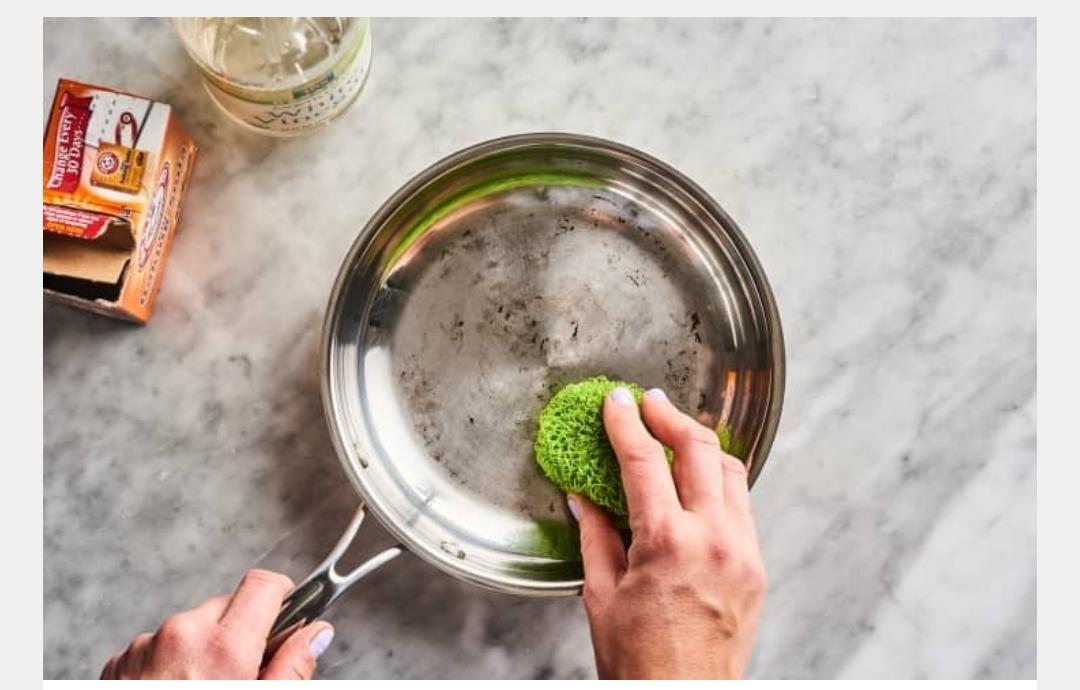
Hot water, baking soda, vinegar, and a gentle scouring pad is all you need for easy cleaning and a sparkling surface.
But even sometimes this doesn't solve the problem completely when you clean in a hurry and don't let solutions sit long enough.
So, when you apply vinegar and baking soda paste to your stainless steel pan, let it sit for at least 10 minutes so it begins to break apart dried food particles. And if you want faster results, cover the pan with a warm towel to intensify the deep-cleaning action.
Final Words
Stainless steel pans, undoubtedly, are far superior to any temporary non-stick solution. But once your food starts sticking on the surface, it's time to rethink your approach. Because the problem is never the pan, it's the lack of proper preheating, and the oiling step that was overlooked. So, it's best to slow down, respect the process and make patience a part of every recipe you prepare.
FAQs
1. What temperature should a stainless steel pan be at before cooking?
The aim should be a pan surface in the 190–230°C (375–450°F) range, just hot enough to pass the water-bead test.
2. Which oil is best for stainless steel pots?
It depends on what you're cooking and the flavour profile you want to achieve. Also, as higher heat requires higher-smoke-point oils, you should avoid low-smoke-point oils like unrefined butter. Canola oil is the safest all-purpose choice for handling a wide range of temperatures.
3. How much oil should I use to prevent sticking?
Just a minimal, even coat will seal the pan and stop sticking before it starts. A single teaspoon of oil holds everything you need for smooth release.
4. Why does food still stick to my stainless steel pot even after heating and oiling?
There could be many reasons, most often related to the heat being too intense for the oil being used or too low to create an effective release barrier.


LEAVE US A MESSAGE
Zheneng people continue to forge ahead, with the virtuous humanities and exquisite technology perfect combination, full of Unite love of life for you to create elegant, delicate stainless steel daily use and kitchen tableware supplies, With high quality and efficient after-sales service.
Copyright ? 2025 Guangdong Zhenneng Stainless Steel Industry Co., Ltd. - www.csbm2013.com. All rights reserved . ISSN 2024181357-1